How I Ran a Successful Real Estate Business

What has it been like directing a real estate business in Sofia, Bulgaria for the past decade?

Problems

I remember when one of my clients, a bank director, called me one evening and said he had no electricity and had to use a candle to see.  It turned out he had never paid his electric bill.  This was the impetus for the invention of my bill-paying service.  It helps assure that clients’ bills are paid on time with me being promptly reimbursed.  This avoids needless and expensive late fees and reconnection charges from CEZ Electro Bulgaria, the electric company.

Other problems that have arisen over the years include:  leaks (from terraces and roofs); toilets not working; losing the garage’s remote control; outlandish requests or demands; and missing items.

Crisis management

When I get a telephone call from a client, the first thing I do is listen intently to hear what the nature of the problem is.  I then reassure them that the problem will be resolved in a timely manner.  As soon as I hang up, I mobilize key members of my core team to address the problem.

Although solving the problem is my goal, I always bear in mind my renter’s schedule.  As pressing as the problem may be, a visit from the plumber, for example, must happen at a time that is convenient to the renter.

Diplomacy is key

In the high-end, residential real estate business, diplomacy is the key to a satisfied clientele.  It’s vital to respond to individual needs while at the same time affording renters their privacy, giving them their space.  It’s important to be friendly without being chummy; professional without being cold; and clear without offending.

Delineation of duties

One of the key factors that makes my business run smoothly is a clear definition of roles among my staff.  There is no overlap or redundancy because everyone knows exactly what they’re supposed to do.  From the manager, to the lawyer, to the accountant to the handyman, everyone has a job to do.

Rights and responsibilities

My renters have rights and responsibilities.  They have the right to prompt, polite, efficient service and privacy; yet they must, according to Bulgarian law, be “good caretakers.”  This means that they must treat the rental apartment as if it were their own.

Satisfaction guaranteed

The baroque-style furniture, creature comforts, modern amenities and attention to detail all play a part in providing a luxurious, high-end, rental experience.  When my clients are satisfied, I’m satisfied.  When my attitude is such that clients know that I genuinely care about them and will do everything in my power to ensure that their stay is pleasant with everything in the apartment working as it should, their satisfaction leads to the reputation of the business growing, an increase in profitability, and a sense of personal satisfaction on all sides.

Real estate

Image source:  http://www.score.org

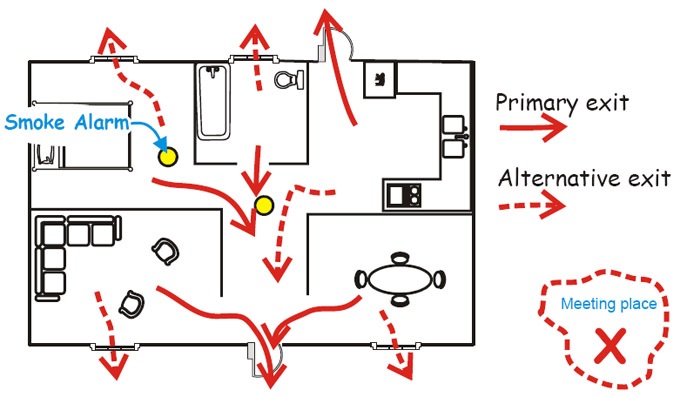
Do you have a plan?

How far into the future should we plan for?  Days, months, years perhaps?  John Lennon said, “Life is what happens while you are busy making other plans.”

A couple of months at most

Don’t bother making plans that exceed several months at most.  This precious advice (which was, incidentally, given to me) is best because:  change is the only constant.

Don’t be disappointed

If you plan ahead no more than, say, two months, you won’t be disappointed if things don’t go according to plan.

Plan B

Although Plan A is wonderful and makes your heart “sing,” don’t forget to tuck away Plan B.  Although you wish for, dream about, long for and can’t picture life without Plan A, keep Plan B in your “pocket” just in case.

Although we may have a perfectly clear vision of where we’d like to be five years from  now and that this vision may, in fact, be realized, unpredictable, unforeseeable events can and often do happen–especially when we least expect them.

Expect the unexpected

This is why it’s important to limit ourselves when planning.  We just don’t know what life will bring.  Perhaps it’s best, therefore, to expect the unexpected.

Flexibility in the face of change

How do you deal with a plan change?  What will you do if–for reasons that are entirely outside of your purview–Plan A fails?  The reason we need to have an alternate plan or plans is to be able to face life changes with flexibility.  Becoming entrenched in a favorite outcome and seeing that outcome suddenly become unattainable is painful yet should make us more flexible.

Realistic expectations

When we make plans, our expectations should be realistic.

Attainable goals

Set goals you can actually attain.

Pragmatic permutations

When you’re thinking strategically, think like a pragmatist.  “Pragma” means “thing” in modern Greek.  So, think “thingy” as opposed to “iffy.”  Be fully confident that what you deeply think about and long for will be yours; yet don’t pre-concretize exactly how it will happen.  Don’t rigidly determine ahead of time how the plan will pan out.

Plan

Image source:  manheimtownship.org

Reality is in the Detail

How much attention do you pay to your environment?  Do you notice what’s happening around you?  How careful are you regarding details pertaining to, for example, your job?

Pay attention

Many people go about their daily business as if they wore blinders.  They focus on a goal yet ignore everything else.  It’s as if nothing existed but their singular aim with the rest of the world meaning next to nothing.  This is not the right approach to take because:  details do matter.

Lost opportunities

Glossing over important details means that you will lose golden opportunities.  Your understanding will be diminished; you will be more rigid and less flexible; your capacity to enjoy life will be curtailed; and you will miss out on life-transforming knowledge.

Intricate interconnectedness

We are not isolated beings single-mindedly following personal agendas.  We are socially-interconnected beings whose behavior affects everyone and everything around us.

High-definition reality

In order to fully experience the richness of our existence, we need to stop “blindly” pursuing limited, personal gain.  Our gain will come in full when we admit that we are interwoven into the social fabric.

The 5 steps to seeing detail and increasing awareness

  1. Observe  Your ability to observe (whether documents, people or situations) will increase your acumen.  The power of observation (i.e., paying attention to minutiae) will draw you closer to reality.
  2. Remember the details you see  After observing important details, write notes to help you remember what you’ve seen.  You could, for example, keep a work-related journal and use dates and times to record matters of importance.
  3. Incorporate what you’ve seen  As you re-read your journal entries or notes, remember the details you described using the written word in your mind’s eye.  This will increase your ability to:  connect with the world around you; develop your memory; and, ultimately, improve your work performance.
  4. Understand the relevance of detail  When you read your journal, you will realize the high degree to which people and events are interconnected; where you belong in the story; and the great importance of minutiae in all things.
  5. Enjoy your new, heightened awareness  It would not be an exaggeration to say that paying attention increases awareness.  Paying attention to the details (e.g., of your job) will enhance your ability to hear and see; focus; and make connections that will increase your awareness and, in turn, result in benefits.

Details

The Big Change You’ve Been Dreaming Of

Do you feel stuck where you are?  Unappreciated perhaps?  Are the pressures and problems of life weighing down on you?  If so, understand:  It doesn’t have to be like this.  There is a way out.

You are the way

The first thing to grasp is that you need to desire change before it can happen.  Only you know what you truly, deeply desire.

Motivation

You’re going to have to motivate yourself from within–draw from inner resources–to change your outward circumstances.

Target

Pick a place and setting where you’d like to be.  If you don’t do this, nothing will happen.

Focus

Focus on what you do best.  This is the quality everyone raves about most.  “Joe is so good at ________________________.”  (Fill in the blank.)  Doing so will enable you to grasp what you should be doing as opposed to what you’re doing.

Believe

You must believe that a big life change is possible.  Believing opens the door for possibilities to materialize.  Your new belief in yourself must be expressed in thoughts and words.

Take measured steps

Once you’re motivated, focused on your target and believe you can make the big change, take the necessary steps.  Writing down your priorities will help.

Success is inevitable

If you follow the above steps, the big change you’ve been dreaming about will happen.

Change

Image source:  freedomquest.ca

Are We Digital Narcissists?

Who influences us is important because they impact our choices and, hence, behaviors.

Blogging, which involves bypassing traditional publication outlets and making our ideas immediately available for public consumption, is, according to Andrew Keen, “digital narcissism.” 1

If Keen is right, then Tumbler.com has 101.7 million narcissists, WordPress has 63 million, Livejournal has 62.6 million bloggers who are “full of themselves,” Weebly, 12 million, and Blogster, 582,754 narcissists. 2

If you do the math, it adds up to a lot of narcissists.

What about company blogs?

If bloggers are show offs who want to “strut their stuff” and “fly in the face of convention,” so to speak, then how do we explain the fact that many of the biggest companies on earth have blogs?

JPMorgan Chase, GE and Johnson & Johnson, to name a few, have blogs.  Does this mean that these corporate giants who encourage their qualified, and interested, employees to explain products and processes to us via blogs are narcissists?

I don’t agree with Mr. Keen’s assessment that people who blog, whether they be individuals or employees of large corporations, are “digital narcissists.”  It’s obvious that blogs with quality content can do wonders for public relations that advertisement dollars simply cannot buy.  If this were not the case, the largest companies on earth wouldn’t have blogs.

A new communications trend

I believe that bloggers are people who have understood the new trend in communications.  Far from being “digital narcissists” or “digital mavericks,” they are individuals who are able to take advantage of the “new parlance,” the “new speak” of modern expression that is:  well-crafted, instant, contains quality content, and offers relevant information.

Narcissism

Image Source:  Progressive Buddhism: Narcissism

progressivebuddhism.blogspot.com/2011/01/narcissism.html

References

1 Strickland, Jonathan. “How Web 2.0 Works.” howstuffworks. 5. Accessed on September 19, 2013. http://computer.howstuffworks.com/web-204.htm

2 Pangburn, Eric. “How Many Blogs Are There?” Snitchim.com. Published on April 7, 2013.  Accessed on September 19, 2013. http://snitchim.com/how-many-blogs-are-there/

The 5 Golden Rules to Success in Social Media

  1. Complete transparency  When I interact with my Facebook friends, I keep in mind that whatever I post will be read by all.  I do not, therefore, say anything that does not pass the test of complete transparency.  Everything I post falls into the “public” category.
  2. Focus on the task at hand  There are many distractions in the world of social media.  Although there’s nothing inherently wrong with playing games or chatting, these activities will take you off task.  If you want to succeed in social media, avoid games and chat only when necessary.
  3. Exercise discernment  With so much going on in social media (i.e., ideas, images–moving and static–requests and advertisements), it’s important to exercise discernment before giving our approval.  If something inside of you, let’s say your intuition, seems to stop you from clicking “like” or adding someone to your circle, pay attention.
  4. Avoid controversy  When dealing with thousands of people, it’s best to avoid controversy.  You do so by remaining calm when someone says something you disagree with.  Remember, freedom of expression is the order of the day in social media settings and this encompasses wide-ranging sets of opinions.
  5. Be positive  Facebook, for example, is a continuous stream of data (words and images).  A person who visits your Page for the first time will see your most recent post first.  It’s vital, therefore, to keep your data stream positive.

Social Media

Image name:  Social Media Logotype Background

Image source:  wallscometumblingdown.wordpress.com/2013/04/…

THE 5 GOLDEN RULES TO SUCCESS IN SOCIAL MEDIA Copyright © 2013 Luba Rascheff

What is the Cloud? (Part IV)

In Part IV of my series, What is the Cloud?, I’d like to discuss the philosophy of cloud computing.

Cloud computing redefines our existing way of thought but only does so by erasing our previous definitions.  Cloud computing is POST-modern…the next step in the philosophy of computing [and, by definition,] undefinable. 1

In spite of the fact that the cloud means different things to different people and that putting our finger on the sheer extent of its applications is difficult if not impossible, it is nonetheless imperative that we understand, more than anything else, that cloud computing is a philosophy.

Steps toward increased security and privacy

“Perhaps the biggest concerns about cloud computing are security and privacy.” 2

Authentication (user names and strong passwords) and authorization (only allowing users access to job-relevant data and applications) are steps toward increasing privacy and security. 3  This works concomitantly with the inherent, financially sound, legal and moral obligation of cloud hosting providers to offer clients security and data integrity.

Questions, questions

Questions currently being debated by law firms, companies and universities revolve around data and its ownership.  Who owns the data?  Is it owned by users or companies subscribing to cloud computing services?  Can a cloud computing company (i.e., a cloud hosting provider) deny users access to their (i.e., the users’) data? 4  These questions literally open up a whole new field in law that will deal primarily with protecting ownership of data in fluid and elastic computing environments where it often “changes hands.”  Moving from server to server, public to private cloud, and virtual environment to virtual environment makes for a maze of potential legal imbroglios.

Autonomic computing

The idea of a “self-managing” computing system could mean the elimination of “the need for many IT maintenance jobs.” 5  Cloud computing means that with the diminishing of front end needs (i.e., no longer needing hardware, software and IT specialists), responsibility for computing requirements will fall onto the back end, the shoulders of cloud, hosting providers.  Simply put, many users transferring responsibility to fewer cloud hosting providers means less need for the unnecessary multiplication of private server rooms, hardware, purchased software and teams of in-house, IT engineers.

Big Data and Big Speed

Cloud computing ensures that our ability to analyze data and to extract business intelligence is not limited by capacity or computing power.  The cloud gives us access to virtually limitless capacity, on-demand.  In doing so, it lowers total cost, maximizes revenue and gets the work done faster at scale. 6

What once took ages and cost tons of money now takes seconds and costs infinitely less.  This is because the processing power that once needed to be, or in fact was, in-house is now in the cloud.

“To process Big Data in the cloud, businesses can expand and contract their infrastructure resources [or, hosted instances] depending on how much they need at the present moment.” 7

(The end of Part IV)

cloud iv

Untitled, by Luba Rascheff

References

1 “The Philosophy of Cloud.” 2vcps and a Truck. Published on March 30, 2009. Accessed on September 3, 2013.  http://www.2vcps.com/2009/03/30/the-philosophy-of-cloud/

2 Strickland, Jonathan. “How Cloud Computing Works.” howstuffworks. Accessed on September 3, 2013. http://computer.howstuffworks.com/cloud-computing/cloud-computing3.htm

3 Ibid.

4 Ibid.

5 Ibid.

6 Varia, Jinesh. “Big Data Cloud Trends–Data-First Philosophy and the Cloud: Part 2 of 3.” Perspectives and Cerebrations.  Published on January 20, 2012. Accessed on September 3, 2013. jinesh.varia.in/2012/01/big-data-clouds-trends-data-first-philosophy-and-the-cloud-part-2-of-3/

7 Ibid.

WHAT IS THE CLOUD? (PART IV) Copyright © 2013 Luba Rascheff

What is the Cloud? (Part III)

The first two parts of What is the Cloud? mostly cover technical aspects of cloud computing, including the matter of security.  In Part III, I’d like to discuss more terms associated with the Cloud and their meanings.

Software as a Service (SaaS)

SaaS means that you don’t need to buy software, hardware needed to run it, or worry about managing software.  “All you have to do is connect [to your cloud hosting provider] and use it.” 1  Your software is in the Cloud; you can use it from any geographical location; and you only pay for what you use. 2  “Google, Twitter, Facebook and Flickr are all examples of SaaS….” 3

Platform as a Service (PaaS)

PaaS “…is a service model of cloud computing.  In this model, the consumer creates the software using tools and/or libraries from the [cloud service] provider.  The consumer also controls software deployment and configuration settings.  The provider provides the networks, servers, storage, and other services.” 4  This is another way to describe hosted instances.  (See, What is the Cloud? Part II)

Infrastructure as a Service (IaaS)

“…IaaS is one of the three fundamental service models of cloud computing alongside Platform as a Service (PaaS) and Software as a Service (SaaS).  As with all cloud computing services it provides access to computing resources in a virtualised environment, “the Cloud”, across a public connection, usually the internet.” 5  IaaS enables users to create “cost effective and easily scalable IT solutions where the complexities and expenses of managing the underlying hardware are outsourced to the cloud provider.” 6  [my emphasis]  This is another way to describe hosted solutions. (See, What is the Cloud? Part II)

Hybrid cloud

A hybrid cloud combines public and private clouds. 7  “[It] is a cloud computing environment in which an organization provides and manages some resources in-house [i.e., privately] and has others provided externally [i.e., publically].” 8

(The end of Part III)

DSCF0032

Untitled, by Luba Rascheff

References

1 Hurwitz, Judith; Bloor, Robin; Kaufman, Marcia; and Halper, Fern.   “Cloud Computing Models. Part of the Cloud Computing Cheat Sheet.” For Dummies.  Accessed on Tuesday, August 27, 2013.  http://www.dummies.com/how-to/content/cloud-computing-models.html?cid=embedlink

2 “What is Saas?” Interoute, from the ground to the cloud.  Accessed on Tuesday, August 27, 2013.   http://www.interoute.com/what-saas

3 Ibid.

4 “Platform as a service.”  Wikipedia, the free encyclopedia.  Accessed on Tuesday, August 27, 2013. http://en.wikipedia.org/wiki/Platform_as_a_service

5 “What is IaaS?” Interoute, from the ground to the cloud.  Accessed on Tuesday, August 27, 2013. http://www.interoute.com/what-iaas

6 Ibid.

7 Rouse, Margaret. “hybrid cloud.” TechTarget. Published on June 28, 2010.  Accessed on Tuesday, August 27, 2013.  http://searchcloudcomputing.techtarget.com/definition/hybrid-cloud

8 Ibid.

WHAT IS THE CLOUD? (PART III) Copyright © 2013 Luba Rascheff


What is the Cloud? (Part II)

In Part I of What is the Cloud?, I discussed the key concept of the separation of applications and operating systems from hardware.  I explained how this separation permits elasticity, adaptability and ease of migration in the event of hardware failures in order to maintain a seamless user experience.

I also talked about redundancy, the replication of data; clustering, the multiplying of servers to balance web traffic load; virtualization; and web applications.

There are, however, more terms associated with cloud computing.

Hosted instances

Hosted instances are server images, applications, services and configurations that are already installed on a host.  For example, you can create an instance of your operating system on Amazon’s Elastic Compute Cloud (EC2) environment and only pay for what you use.  You get space, transfer and RAM and can configure your server instance any way you like. 1

In hosted instances, network speed becomes an issue since your data is in the Cloud and needs to quickly move from there to you.  To deal with this, Amazon, for example, has a main server and nine edge servers across the U.S.  These edge servers (akin to “boosters”) are positioned in such a way as to provide users with the fastest access to their server images (i.e., server configurations of choice or, hosted instances). 2  You may already be using hosted instances without even realizing it.  Google’s Gmail, for example, is in the Cloud. 3

Hosted solutions

“Hosted solutions are applications or services that are hosted by a company that provides you the service.” 4  There are many hosted solutions available on the Web.  Instead of setting everything up by yourself (i.e., purchasing hardware, software, appropriate licenses and storage space), you can pay a small monthly fee to Vendhost, for example, and get a hosted, cloud solution.

Private vs. public cloud

Hosted instances are in the public cloud.  If you’re interested, though, in combining the power of virtualization while retaining in-house control, you certainly can by way of private cloud.  In private cloud, the  hardware resides in your server room, not “somewhere out there” on the Internet. 5

What about security?

When it comes to the Cloud, security is a big question on everyone’s mind.  You may be wondering, How secure is my data if it’s sitting somewhere out there in the Cloud?  The first question you need to ask yourself, though, is How secure is my data right now?  Most small businesses do not invest a large amount of money in order to have perfect firewall protection.  They will, rather, pay an hourly fee to have viruses removed once stricken. 6  Furthermore, any time we interface with the Internet, we risk exposure to infection.  Since it’s in the interest of cloud, hosting providers to provide excellent service, security, speed and data integrity (their very existence depends on it), it’s actually much safer to host your data in the Cloud as opposed to storing it locally.  Furthermore, local, in-house servers are subject to destruction (e.g., from natural disasters) and/or theft.  It makes much more sense (including economic sense) to have the minimal computing equipment in house necessary to interface with your cloud host. 7

(The end of Part II)

800px-Cloud_in_nepal

Cloud in nepali sky

Author:  Krish Dulal

Source:  Own work

References

1 elithecomputerguy.  “Everyman IT, Introduction to Cloud Computing.”  Everyman IT.  Published on December 17, 2010 on Youtube.  Accessed on August 21, 2013.  http://www.youtube.com/watch?v=QYzJl0Zrc4M

2 Ibid.

3 Neal, Ryan W. “The Google Cloud Expands: Gmail, Drive and Google+ Now Unified with 15 GB Free Storage.” International Business Times.  Published on May 14, 2013.  Accessed on August 26, 2013.  http://www.ibtimes.com/google-cloud-expands-gmail-drive-google-now-unified-15-gb-free-storage-1257917

4 elithecomputerguy.  “Everyman IT, Introduction to Cloud Computing.”  Everyman IT.  Published on December 17, 2010 on Youtube.  Accessed on August 21, 2013.  http://www.youtube.com/watch?v=QYzJl0Zrc4M

5 Ibid.

6 Ibid.

7 Ibid.

WHAT IS THE CLOUD? (PART II) Copyright © 2013 Luba Rascheff

What is the Cloud?

In case you didn’t know, Forbes is running a series on cloud computing.  In one of the articles, Apple founder Steve “the Woz” Wozniak partly defines cloud computing like this:  “The cloud’s a vague term even to me.  It can mean different things to different people.

“You don’t know where it is.  Cloud computing is a specific hardware organization where resources can be assigned remotely and switched around easily and used more effectively.  It saves a lot of physical labor, moving things around and lets people change their minds easily….” 1

Let’s get specific

In this article, I’d like to demystify the Cloud and let you see what’s inside this “vaporous mist.”

It’s like Legos

If you’ve ever played with Legos, you know that you build structures by “clicking” elements together.  You also know that you can dismantle structures by “un-clicking” elements.  In the case of cloud computing, it has to do with being able to separate operating systems and applications from physical pieces of hardware like servers in order to easily move the former around.

The reason for keeping hardware and software separate (via virtualization software, a component of cloud computing) is to be able to easily move operating systems and applications in the case of hardware failures. 2  Doing so enables systems to continue running and users to continue working, as if a crash hadn’t happened.

No longer dumb, but thin

In the old days, one mainframe used to be connected to several dumb terminals.  The mainframe allocated a certain amount of computing power to each dumb terminal and users were happy as long as things worked.  If the mainframe crashed, though, everything stopped.  If a company had, for example, an internal e-mail service, a mainframe failure represented a stoppage of the e-mail service. 3

Today, in cloud computing, instead of individual mainframes and dumb terminals, we have Terminal Services Servers (TSSs) and thin clients (hardware or software).  Virtual computing, which is a component of cloud computing, allows for the easy migration of operating systems and applications to different pieces of hardware. 4

Web applications

In cloud computing, using web applications means that you are using applications that reside on servers that don’t belong to you, that are outside of your computing environment.  If you open a web application,  it means that although a window will appear via your browser displaying the application you’re familiar with on a screen that resembles your desktop environment, the application, in fact, resides on a server external to your environment.  You did not purchase the application and you don’t have to worry about repairing or replacing it if it fails; you’re simply using the application as if it were located on your laptop.  This means that should your laptop crash, none of your work will be lost.  You can just get up, move to a different laptop or computer, log in and continue where you left off. 5

Clustering, replication and load balancing

In the Cloud, you can (using virtualization software) group multiple servers with identical databases together in clusters.  Data replication means that when Internet traffic increases to a server in a particular cluster, so much so that it risks breaking down said physical server, instead of crashing (with user services being interrupted), traffic will be redirected (i.e., the load will be balanced) to another server in the cluster.

If this, second, server comes close to being overloaded, traffic will be redirected to a third server in the cluster.  This process is repeated allowing users to continue working seamlessly without interruption of services due to hardware crashes.

It’s not what you think or where you think

One of the key concepts to grasp regarding the Cloud is that what you’re using doesn’t reside where you think it does; nor is it what it looks like.  This is because although what appears on your screen may look like your desktop, it isn’t your desktop; and the application that seems to be so close actually belongs to someone else and resides thousands of miles away!  You never purchased the application nor did you install it on your machine. 6  This means that instead of taking twenty-four hours to recover from a hardware crash, it can take only one hour.  This represents a great saving of time and effort.

Easy migration

In virtualization (client installed or using Hypervisor along with ESXI) the operating system “sits above the hardware” and, “using copy and paste,” you can move it to a new piece of hardware when needed.

(End of Part I)

 21198_479297152115317_1978043576_n

Untitled, by Luba Rascheff

References

1 Orosco, Cesar. “Steve Wozniak: Apple, Cloud, Flash, Luck And Open Doors.” Forbes. Published on April 15, 2013. Accessed on August 21, 2013.  http://www.forbes.com/sites/netapp/2013/04/15/steve-wozniak-interview/

2 elithecomputerguy. “Everyman IT, Introduction to Cloud Computing.”  Everyman IT. Published on December 17, 2010 on Youtube.  Accessed on August 21, 2013.   http://www.youtube.com/watch?v=QYzJl0Zrc4M

3 Ibid.

4 Ibid.

5 Ibid.

6 Ibid.

WHAT IS THE CLOUD? PART I Copyright © 2013 Luba Rascheff