How to Use Amazon’s Createspace

If you’ve written a book in, say, Microsoft Word and have proofread it, properly formatted it, and have a title page, copyright page, introduction, table of contents and distinct chapters, you are essentially ready to roll for Createspace.

Although a variety of trim sizes (i.e., book sizes) are available, I recommend selecting the 6” x 9” setting, B & W. Why this trim size?, you may ask. Choosing a 6” x 9” trim size will ensure that your book is fit for most distribution channels. Your title will be exposed to more potential customers hence increasing your chance of being discovered and read.

Once your book is in its most perfect form possible and you have zero spelling and grammar errors, go to the Createspace website and, if you haven’t already done so, open an account. Select the “add new title” option. You don’t need to worry about buying an ISBN; Createspace will automatically assign one for you if that’s what you choose.

The secret is, once logged on and moving through the process, to find the link that leads to Createspace’s interior templates. Download the 6” x 9” template to your computer. Copy and paste your ready book into the template. Visually check that the pages are numbered sequentially; that your chapters are correctly numbered; that your headers alternate between your name and book’s title appropriately; and that you are completely satisfied with how the book appears. The template will ensure that your book’s margins, fonts, pagination and other settings satisfy Createspace requirements. If you’re careful, patient and thorough, this will save you time later. Export the file as a PDF and upload to Createspace.

After you’ve inputed the book’s title, have selected an ISBN, category, and successfully uploaded the book’s interior to Createspace, you’re now ready to create the cover.

In the same way that Createspace offers the right template for your book’s interior, Createspace has a cover creator. The creator comes with a variety of styles to choose from as well as images. If you choose an image from Createspace, make sure to read the fine print about what doing so entails. Alternatively, you can upload one of your own images. The steps you’ll need to complete while using the cover creator are: Theme, Title, Subtitle (if applicable), Author, Front Cover Image (yours or one offered by Createspace), Author Photo (optional), Publisher Logo (optional), Back Cover Text and Background Color. Createspace will take care of the bar code for you.

I enjoyed uploading my own image and experimenting with different styles and colors offered by the cover creator.

After completing the above, Createspace will suggest that you use its interior reviewer. I highly recommend that you do so. If you haven’t embedded your text, do not worry. Createspace will do it for you.

Createspace offers a range of distribution channels. The more channels you select, the more exposure your title will receive. I personally selected the minimum price threshold for my book (generated by Createspace) since this guarantees the lowest possible price for my readers.

Once you’ve finished, you’ll be prompted to submit your file for review. You’ll receive an e-mail within 24 hours with further instructions. In my case, I was congratulated, told that my file was printable, and asked to do a final review which I did.

Fortitude

Fortitude has to do with facing pain or adversity courageously through endurance.

Light at the end of the tunnel

When we face difficult or challenging circumstances, we can become discouraged and think, When will this end?  The truth, however, is that nothing lasts forever.  There is light at the end of the tunnel.

Don’t give up

We endure certain hardships because we know that they won’t always be.  A Chinese philosopher said that the best way to face a seemingly unmovable obstacle that appears like a ‘boulder’ is to do nothing.  Nothing? you ask.  Nothing because by disengaging, you allow time to work on and solve the problem.

Resist futile efforts

Have you ever tried to solve a problem by tackling it aggressively with everything you’ve got only to see that all of your efforts were futile?  Nothing you tried seemed to work and it all ended in frustration.

This happens when we fail to realize that there is a right time for everything and that artificially attempting to manipulate outcomes doesn’t work.

The ‘umph’ factor

When we know that we cannot change a particular situation or fix a particular problem immediately, we need to endure.  We need to, essentially, dig our heels in and wait.

Time plays a big role

Determining when to act versus when to wait is vital.  If you feel that things are flowing, that certain people almost magically appear in your life, and that all the signs pertaining to resolution say ‘go,’ you can circumvent the ‘boulder.’  You can move around it!

Splash

Image by Luba Rascheff

The Story of Iannis V.

Writers are storytellers.

As I thought about a story to tell you, I settled on the story of Iannis V. *, a rich and influential Greek businessman.  I thought about him because he made an impact on me.

Even though Iannis owns over thirty homes, he mostly lives in two, one of which is a beach house.  He called me recently and asked, ‘What do you know about roses?’  I was flattered that he thought to ask me.  He explained that he wanted to plant them near his beach house and sell them.  ‘Near your beach house?’ I asked incredulously.  ‘Yes, yes!  I researched it and they’ll grow here just fine.’  I replied that I didn’t know much other than to mention Bulgaria’s Rose Valley.  It hardly surprised me that at an advanced age Iannis would attempt to cultivate roses near a beach for export.

To spend or not to spend

When we first met, he told me that, once upon a time, he didn’t have much money at all.  ‘When I didn’t have money, I staid home.  When I had money, I’d go out to the restaurant.’  It was an astonishingly simple yet powerful statement.  He then made some disparaging remarks regarding the spending habits of younger Greeks. 1

On a separate occasion, Iannis said, ‘When I was a teenager, my friends wanted me to smoke even though I didn’t.  One day, they bunched up on me and forcibly held me against a wall as they tried to stick a cigarette in my mouth.’  Iannis laughed out loud as he remembered, his perfectly intact, white teeth flashing and his brown eyes dancing.  ‘I fought back by kicking them hard.  I don’t smoke!’ he said earnestly.

Not only doesn’t he smoke, Iannis told me that he goes to bed at sunset and gets up at sunrise.  He told me he’s done this his entire life.

Good behavior, bad behavior

Iannis seems to attract scandal to him like a magnet.  Some people love him, while others hate him.  He’s even received threats.

In spite of it all, though, I think that Iannis V. is an extraordinary character.  Although lacking a formal education, he is brilliant, highly disciplined and an amazing businessman who knew exactly what he wanted from an early age.

—————————————————

* Name changed to protect identity.

1 He was referring to borrowing from parents and the use of credit cards.  Note that this conversation took place prior to the financial crisis of 2008.

2013-01-02 17.00.51

Image title:  ‘Sunset over the Acropolis’

Photographer:  Luba Rascheff

Accepting Cultural Diversity

Although we hear the occasional horror story about how someone, on account of their race, origin or religious beliefs, is discriminated against, the truth is that globalization (however we view it) is thrusting acceptance upon us.

In Bulgaria, for example, the civil war in Syria resulted in a wave of immigrants from that ravaged country.  Bulgaria, a country of roughly eight million mostly older people, and virtually devoid of population with a 0.6 population growth rate 1, is now facing the prospect of new faces from faraway places (e.g., Syria, Algeria and Russia for example), some of different faiths than the predominant Bulgarian Orthodox religion.

I heard a story in which villagers, all of whom were seniors, pulled out their rifles when they heard that refugees of a different religion would be forcibly settled in their village.  ‘What will happen?’ I asked, deeply concerned about such a violent reaction.  ‘The gendarmerie will become involved.’

Acceptance vs. Resistance

We cannot stop change.  We must accept that there are certain forces at work that are beyond our control.  As hard as it is for some of us to accept that our world has changed and continues to change, from a psychological perspective, acceptance is healthier than resistance.

Breaking the barriers of difference

There are civilized ways of dealing with difference.  Diplomacy, communication, civility, an open mind and a welcoming heart.

A personal example

My family moved from Toronto, Canada to Champaign, Illinois when I was a child.  As a youngster, I did not travel well and do not remember crossing the border on account of the suppository my parents gave me.

It was not a direct route since, first, I graduated from Mrs. Armitage’s kindergarten in Toronto and, later, completed first grade in Madison, Wisconsin.  As soon as we arrived in Champaign, my mother was befriended by the late Eloise Wachala, a poet, who introduced her to the C-U International Women’s Group.  Through this group, Mother met many wonderful women who subsequently became her friends.

This open, welcoming and accepting way is beautiful.  It is the opposite of fear, suspicion and discrimination.  This open, beautiful way is what made America the culturally diverse nation it is today.

After centuries of wars, conquests and oppression, we cannot entirely blame the older Bulgarian villagers for their deep mistrust of foreigners.  We need to keep things in perspective in that regard.  Nevertheless, let us open the door for change by acknowledging that times have changed.  Wars are mostly economic these days and immigrants have much to offer from professional expertise to culinary delights.

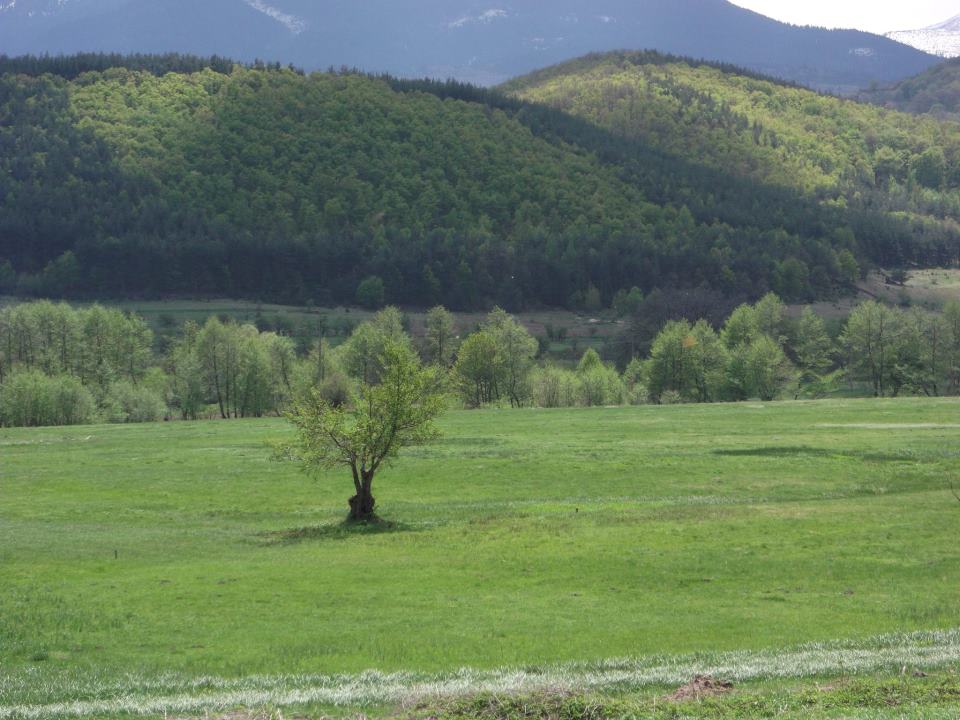
Green Nuances

Image title:  ‘Green Nuances.’

Description: On the outskirts of Raduil, Bulgaria.

Photographer:  Luba Rascheff

References

1 Source:  https://www.google.bg/search?q=bulgaria+birth+rate&ie=utf-8&oe=utf-8&rls=org.mozilla:en-US:official&client=firefox-a&gws_rd=cr&ei=K1Z_UpecD4Tcswb_l4HoCA#q=bulgaria+population+growth+rate&rls=org.mozilla:en-US:official&stick=H4sIAAAAAAAAAGOovnz8BQMDgz8HjxKHfq6-gaFpYYaWY3aylX5OfnJiSWZ-nn5xCZAuLslMTsyJL0pNBwpZFeQXlOaAZePTi_LLSzLiixJLUuPL84tyUuKTEvOy84_fevNqwT4vt7uxNRMclAXV_nJsBwD9MMUDbAAAAA


Crossing the Threshold of Excellence

If you’re like me, you place much emphasis on excelling through excellence.  You are meticulous, articulate, focused and aim at succeeding in all of your endeavors.

Stand out

What is that special quality that enables one to stand out in a crowd without resorting to inappropriate methods?

Impeccability

Do you behave the same way at home as you do at work?  Is your behavior flawless in the sense that you have one standard and that this standard defines, in fact is, your personal brand?

Accountability

Do you take accountability for your actions or, if things don’t work out, blame others?

Crossing the threshold of excellence

When you’ve made a conscious decision to stand out via your impeccability and pursuit of excellence, you’ve crossed the point of no return.  You’ve distinguished yourself from the crowd as someone who will succeed, period.

The difference between you and those who choose mediocrity is that you’ve consciously crossed the threshold of excellence.

What are the signs of having crossed the threshold of excellence?

  1. Acting will be easy.  Once you have consciously decided to accept responsibility and, generally speaking, ‘give it your all,’ you will immediately know how to act in all situations, even difficult ones.
  2. Doubt will vanish.  The doubt you once secretly harbored about yourself and your potential will vanish.
  3. A noticeable difference.  People won’t recognize you anymore.  ‘What?  Is that [put your name here]?’ they’ll ask.
  4. Success will come.  You will find yourself (even under difficult circumstances) easily succeeding (e.g., closing deals, increasing your reputation, etc.)
  5. A new vision.  When you cross the threshold of excellence, a new vision will come upon you:  the uncanny ability to ‘see’ what’s around the corner or down the road.

When you come to the point of no return and cross the threshold of excellence, you will stand out and your success will be unparalleled.

Reaching for Excellence

Reaching for Exellence

Image source:  xaxor.com/photography/21817-mountain-climbing-photography-by-various-photographers.html

How to Get What You Want

Getting what you want is not as hard as you may think.  They say that when you really want something, the whole universe conspires to help you get it.

What do you want?

The first step in getting what you want is knowing what you desire.  You must sit down and think about, really think about, what it is you wish to attract to your life.

Ignore the push-pulls

Others may envision different things for you than you envision.  In the process of obtaining your heart’s desires, it is imperative that you ignore the desires of others and focus on your desires.  Although this may sound selfish, it is often the case that people who lack confidence may wish to live through you vicariously.  Let them; but only after you’ve focused on your goals, not theirs.

Once you’ve established what it is you truly desire, like your dream job, imagine that you are already there.  See yourself in the position of your dreams, seated at your desk, in your office, with a name plate bearing your name on your office door.

Stop struggling

When you decide, visualize and believe that you’ve already obtained the position that’s best for you, for which you’re best, and that fits you most, processes will kick in to make it a reality.  It’s not that you will suddenly stop acting; you will act, but in a very limited and targeted way.  You will act only in the sense of performing necessary actions.  This may mean sending out your resume, improving your LinkedIn Profile, or making a phone call.

Why do we make it hard?

I think that we often make things harder for ourselves than they need to be because of insecurity.  We think that if we do more or push harder, we will somehow be ‘more.’  This is not true.

Be in the moment

To get your dream job, you’ll need to be in the moment.  Don’t be anxious.  Don’t try to figure out how it will happen. Instead, continue visualizing and deeply believing that what you want is already yours.

Light Balance

Light Balance, by Luba Rascheff

How I Ran a Successful Real Estate Business

What has it been like directing a real estate business in Sofia, Bulgaria for the past decade?

Problems

I remember when one of my clients, a bank director, called me one evening and said he had no electricity and had to use a candle to see.  It turned out he had never paid his electric bill.  This was the impetus for the invention of my bill-paying service.  It helps assure that clients’ bills are paid on time with me being promptly reimbursed.  This avoids needless and expensive late fees and reconnection charges from CEZ Electro Bulgaria, the electric company.

Other problems that have arisen over the years include:  leaks (from terraces and roofs); toilets not working; losing the garage’s remote control; outlandish requests or demands; and missing items.

Crisis management

When I get a telephone call from a client, the first thing I do is listen intently to hear what the nature of the problem is.  I then reassure them that the problem will be resolved in a timely manner.  As soon as I hang up, I mobilize key members of my core team to address the problem.

Although solving the problem is my goal, I always bear in mind my renter’s schedule.  As pressing as the problem may be, a visit from the plumber, for example, must happen at a time that is convenient to the renter.

Diplomacy is key

In the high-end, residential real estate business, diplomacy is the key to a satisfied clientele.  It’s vital to respond to individual needs while at the same time affording renters their privacy, giving them their space.  It’s important to be friendly without being chummy; professional without being cold; and clear without offending.

Delineation of duties

One of the key factors that makes my business run smoothly is a clear definition of roles among my staff.  There is no overlap or redundancy because everyone knows exactly what they’re supposed to do.  From the manager, to the lawyer, to the accountant to the handyman, everyone has a job to do.

Rights and responsibilities

My renters have rights and responsibilities.  They have the right to prompt, polite, efficient service and privacy; yet they must, according to Bulgarian law, be “good caretakers.”  This means that they must treat the rental apartment as if it were their own.

Satisfaction guaranteed

The baroque-style furniture, creature comforts, modern amenities and attention to detail all play a part in providing a luxurious, high-end, rental experience.  When my clients are satisfied, I’m satisfied.  When my attitude is such that clients know that I genuinely care about them and will do everything in my power to ensure that their stay is pleasant with everything in the apartment working as it should, their satisfaction leads to the reputation of the business growing, an increase in profitability, and a sense of personal satisfaction on all sides.

Real estate

Image source:  http://www.score.org

Do you have a plan?

How far into the future should we plan for?  Days, months, years perhaps?  John Lennon said, “Life is what happens while you are busy making other plans.”

A couple of months at most

Don’t bother making plans that exceed several months at most.  This precious advice (which was, incidentally, given to me) is best because:  change is the only constant.

Don’t be disappointed

If you plan ahead no more than, say, two months, you won’t be disappointed if things don’t go according to plan.

Plan B

Although Plan A is wonderful and makes your heart “sing,” don’t forget to tuck away Plan B.  Although you wish for, dream about, long for and can’t picture life without Plan A, keep Plan B in your “pocket” just in case.

Although we may have a perfectly clear vision of where we’d like to be five years from  now and that this vision may, in fact, be realized, unpredictable, unforeseeable events can and often do happen–especially when we least expect them.

Expect the unexpected

This is why it’s important to limit ourselves when planning.  We just don’t know what life will bring.  Perhaps it’s best, therefore, to expect the unexpected.

Flexibility in the face of change

How do you deal with a plan change?  What will you do if–for reasons that are entirely outside of your purview–Plan A fails?  The reason we need to have an alternate plan or plans is to be able to face life changes with flexibility.  Becoming entrenched in a favorite outcome and seeing that outcome suddenly become unattainable is painful yet should make us more flexible.

Realistic expectations

When we make plans, our expectations should be realistic.

Attainable goals

Set goals you can actually attain.

Pragmatic permutations

When you’re thinking strategically, think like a pragmatist.  “Pragma” means “thing” in modern Greek.  So, think “thingy” as opposed to “iffy.”  Be fully confident that what you deeply think about and long for will be yours; yet don’t pre-concretize exactly how it will happen.  Don’t rigidly determine ahead of time how the plan will pan out.

Plan

Image source:  manheimtownship.org

Reality is in the Detail

How much attention do you pay to your environment?  Do you notice what’s happening around you?  How careful are you regarding details pertaining to, for example, your job?

Pay attention

Many people go about their daily business as if they wore blinders.  They focus on a goal yet ignore everything else.  It’s as if nothing existed but their singular aim with the rest of the world meaning next to nothing.  This is not the right approach to take because:  details do matter.

Lost opportunities

Glossing over important details means that you will lose golden opportunities.  Your understanding will be diminished; you will be more rigid and less flexible; your capacity to enjoy life will be curtailed; and you will miss out on life-transforming knowledge.

Intricate interconnectedness

We are not isolated beings single-mindedly following personal agendas.  We are socially-interconnected beings whose behavior affects everyone and everything around us.

High-definition reality

In order to fully experience the richness of our existence, we need to stop “blindly” pursuing limited, personal gain.  Our gain will come in full when we admit that we are interwoven into the social fabric.

The 5 steps to seeing detail and increasing awareness

  1. Observe  Your ability to observe (whether documents, people or situations) will increase your acumen.  The power of observation (i.e., paying attention to minutiae) will draw you closer to reality.
  2. Remember the details you see  After observing important details, write notes to help you remember what you’ve seen.  You could, for example, keep a work-related journal and use dates and times to record matters of importance.
  3. Incorporate what you’ve seen  As you re-read your journal entries or notes, remember the details you described using the written word in your mind’s eye.  This will increase your ability to:  connect with the world around you; develop your memory; and, ultimately, improve your work performance.
  4. Understand the relevance of detail  When you read your journal, you will realize the high degree to which people and events are interconnected; where you belong in the story; and the great importance of minutiae in all things.
  5. Enjoy your new, heightened awareness  It would not be an exaggeration to say that paying attention increases awareness.  Paying attention to the details (e.g., of your job) will enhance your ability to hear and see; focus; and make connections that will increase your awareness and, in turn, result in benefits.

Details

The Big Change You’ve Been Dreaming Of

Do you feel stuck where you are?  Unappreciated perhaps?  Are the pressures and problems of life weighing down on you?  If so, understand:  It doesn’t have to be like this.  There is a way out.

You are the way

The first thing to grasp is that you need to desire change before it can happen.  Only you know what you truly, deeply desire.

Motivation

You’re going to have to motivate yourself from within–draw from inner resources–to change your outward circumstances.

Target

Pick a place and setting where you’d like to be.  If you don’t do this, nothing will happen.

Focus

Focus on what you do best.  This is the quality everyone raves about most.  “Joe is so good at ________________________.”  (Fill in the blank.)  Doing so will enable you to grasp what you should be doing as opposed to what you’re doing.

Believe

You must believe that a big life change is possible.  Believing opens the door for possibilities to materialize.  Your new belief in yourself must be expressed in thoughts and words.

Take measured steps

Once you’re motivated, focused on your target and believe you can make the big change, take the necessary steps.  Writing down your priorities will help.

Success is inevitable

If you follow the above steps, the big change you’ve been dreaming about will happen.

Change

Image source:  freedomquest.ca