You Won’t Believe Your Eyes: Secrets Marquis Los Cabos

In my perpetual quest for the ultimate in customer service and satisfaction, as I looked through Reader’s Digest “Top 10 Most Luxurious Hotels in the World,” the last resort on the list caught my eye: Secrets Marquis Los Cabos, Mexico. Why don’t you take the resort tour first. It has very pleasant, ambient music that conveys the mood.

Secrets Marquis Los Cabos, was “inspired by a celestial legend of two angels seeking paradise on earth ….” 1 If you take the virtual tour, it will help you understand, in 3D, why this resort really is paradise on earth. (Click on any photo on the left to start a given tour.)

The resort boasts of unlimited luxury and the possibility of seeing migrating whales from your balcony. George Clooney’s beach villa is next door. 2 Secrets Marquis Los Cabos is the ultimate, romantic destination for honeymooners and the service is excellent. According to this testimonial, Jake from Canada says,

I honestly can’t say a single negative about the service … I’ve stayed at other places, but this is the best service that I’ve ever received.”

Jake and his Columbian wife, who initially stayed in the Honeymoon Suite before moving to the Junior Suite (with which they were highly satisfied), refer to the resort as a “dream,” a place where you can “get away and relax.” Watch the testimonial and decide for yourself.

The resort received the following awards: membership in The Leading Hotels of the World; the 2013 Trip Advisor Certificate of Excellence; was named one of U.S. News & World Report’s Best Hotels in Mexico 2013; is recognized as a RCI Gold Crown Resort ®; and, for the tenth consecutive year, earned the AAA Four Diamond Award 2013. 3

Secrets Marquis Los Cabos places social responsibility at a premium. It is: Rainforest Alliance Verified ™; was recognized as practicing exemplary practices for sustainable tourism; gets its water supply from a water desalting plant (sea water in, fresh water out); produces ecological soap; recycles organic waste into compost which is used to fertilize the resort’s gardens; and implements the annual Turtle Protection and Release program. 4

The resort boasts of a world-class spa with a wide variety of spa packages to choose from. 5

Secrets Marquis Los Cabos offers a wide choice in gourmet dining: the Barefoot Grill (Grilled Specialties); Canto del Mar (Gourmet Cuisine); the Coco Café (a charming niche offering Premium Coffee & Pastries); Dos Mares (Seafood Favorites); Spice (Pan-Asian Cuisine); and Vista Ballenas (Mexican & International). Click here to view images.

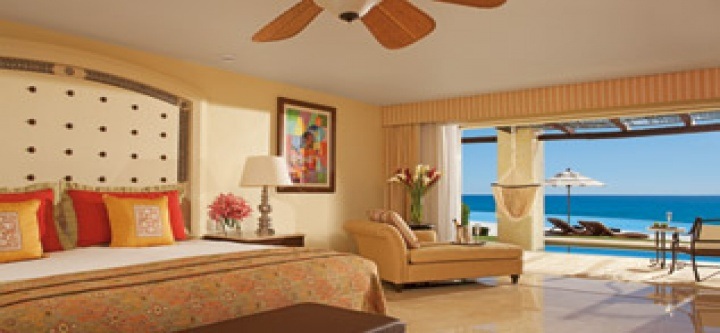
Here’s what your suite could look like:

Private Pool Casita

Private Pool Casita Suite, Secrets Marquis Los Cabos

For availability and pricing, visit their website.

For more Secrets Resorts and Spas (and, yes, there are more which I’ll explore for you later), visit the main website.


Enjoy your stay!

References

1. Reader’s Digest. Top 10 Most Luxurious Hotels in the World.

2. Ibid.

3. Secrets Marquis, Los Cabos. http://www.secretsresorts.com/marquis-los-cabos/awards

4. Secrets Marquis, Los Cabos. http://www.secretsresorts.com/marquis-los-cabos/social-responsibility

5. Secrets Marquis, Los Cabos. http://www.secretsresorts.com/marquis-los-cabos/spa


7 Healthy, Fall Recipes

It’s not always easy to find healthy recipes. Here are seven, healthy, fall recipes from EatingWell (www.eatingwell.com) you can prepare for friends and family. Enjoy!


#1 Bucatini alla Putanesca

Bucatini alla Puttanesca - EathingWell

Click here for recipe.

#2 Orange, Anchovy & Olive Salad

Orange, Anchovy & Olive Salad - EatingWell

Click here for recipe.

#3 Paprika Chicken Thighs with Brussels Sprouts

Paprika Chicken Thighs with Brussels Sprouts - EatingWell

Click here for recipe.

#4 Orecchiette with Broccoli Rabe

Orecchiette with Broccoli Rabe - EatingWell

Click here for recipe.

#5 Broccoli-Cheddar-Chicken Chowder

Broccoli-Cheddar-Chicken Chowder - EatingWell

Click here for recipe.

#6 Spaghetti with Halibut & Lemon

Spaghetti with Halibut & Lemon - EatingWell

Click here for recipe.

#7 Apple Bavarian Torte

Apple Bavarian Torte - EatingWell

Click here for recipe.


On Inspiration vs. Struggling to Write

I finished a short book, 101GNOA (abbreviated), and am working on 101GNOA, 2. I find that when I have a book in ready format (for Amazon, Kindle, for example), it’s very easy to expand upon what has already been written. You’ll be hearing more about these two, little power-punching books in about five months from now or so once they clear copyright.

Although some may disagree, for me personally, inspiration is the key to good writing. Without inspiration, I don’t believe that I would be able to offer readers memorable material.

There is a certain humanity to Pearl Buck’s The Good Earth that has stayed with me over the years. I can’t say the same for the multitude of novels I’ve read, some written by well-known authors. This speaks volumes about an inexplicable quality that has so much more to do with the soul than an ability to mechanistically assemble carefully crafted sentences  like car parts in a factory.

What is it, therefore, that makes one story—or parts thereof—stick to one’s memory and others slip away into oblivion?

Research and critical thinking

Combined with inspiration is research and critical thinking. When inspiration comes—and count your blessings when it does—you’ll need to structure it in such a way as to make sense. There must be cohesion and it must fit inside a larger context. In other words, it’s got to make sense; and I’m not just talking about the plot, names of characters, event sequence, color cordination, etc. I’m referring to meaning that goes beyond syntax, grammar, spelling, plot, paragraph formation, suspense and conclusion.

The flow

When I write and feel inspired, there is a ‘flow’ that starts which can be likened to a flowing stream of water. Momentum builds up and content ‘pours’ out of me. This is the kind of inspiration that writers should aspire for. Why? Why should we be inspired at all? I believe that writers for whom it is the case should stop struggling in order to express themselves.

The big secret is that writing can and should be a lot easier than it’s made out to be, provided you’re inspired.


Working versus struggling

To say that one must struggle in order to produce memorable content is a myth.

Doing research for, say, a historical novel—I’ve done this and can speak to it—constitutes work but doesn’t represent a struggle. Struggling is when we must exert effort in order to say something.

Uplifting oneself toward inspiration

To be inspired one has to seek inspiration or, at the very least, be open to  receive it. When inspiration ‘knocks’ at the door, it’s up to you to open it.

Inspiration will come, but it won’t come all the time. That’s because it isn’t humanly possible to be inspired at all times. It is, however, within the realm of possibility to be inspired some of the time.

Whatever its frequency, inspiration is the source of memorable content that makes an impact and changes lives.

May you be inspired!

Inspiration image


On Writing and Immortalization

There’s a famous author whose name I can’t recall. Prior to attaining fame, he holed himself up in an attic with the intention of writing the ultimate novel. He sat in his attic room, at his desk, for one month staring at a blank sheet of paper unable to write anything at all. He couldn’t pen a single word.

The young man left the attic room and started traveling. He had experiences that moved and changed him. It was only then that he was able to write the novel he had tried to start prematurely in vain. He realized that, without life experience, without having felt anything, he had nothing to say. The aspiring author had been a blank slate needing to be filled.

It is only after reading much, living much, analyzing much and practising the art of writing much that we are able to, with few words, say things that are meaningful and have the potential to influence readers. Anything prior to that represents crude attempts at expression that could be likened to a Neanderthal trying to recite Shakespeare.

Frozen in time

Writers possess a unique gift: we can freeze time. Writing enables us to take situations and immortalize them. And, by immortalizing situations, we ultimately immortalize ourselves. We leave behind us a body of works that can be read again and again, works that speak to those lived events that changed us and have the capacity to change others.

At the right time

There’s a time for everything and this includes producing a literary work. As much as people extol motivation, the best creations are produced through inspiration. In the same way that the now-famous author sat at his attic desk staring at a blank sheet of paper for one month lacked inspiration, we who lack inspiration should leave our ‘attic room’ and head for the proverbial trail.

In slow motion

Writing about the events that ‘fill our slates’ and civilize us is a lifelong proposition. It has everything to do with maintaining the determination to put pen to paper and tell our story. And it has nothing to do with lacking inspiration.

You will become immortal through your writings

One of the hardest things for a seasoned author to do is to move from writing fiction to writing non-fiction. I can attest to this because it happened to me in 2008. It is precisely this, however, that will catapult you into immortality. It is the step that authors fear most yet must take in order to move into another sphere.

The late Maria Zaousi, a well-known, Greek author and friend, talked to me about how she moved from writing fiction to fact. She told me that it was one of the most liberating decisions she’d ever made.

Maria was a very generous person. I was living in Athens at the time. In Europe, heating systems start working at fixed dates regardless of what the weather is like. It became very cold very soon and my cousin George’s apartment was freezing. Maria generously gave my cousin and I a large amount of firewood to warm ourselves.

This happened in 2001, but I still remember Maria’s words.

Rest in peace, Maria, and may your works continue to be read.

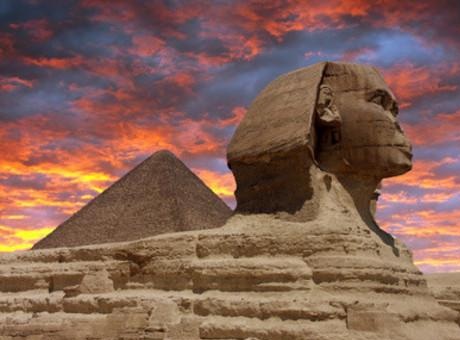
The Sphinx

Image title: “Wealth, power and desired immortality: monuments and tombs (Sphinx and Pyramid).

Image source: http://www.oubey.com


Let Us Revive Deep Thinking

I just read an insightful article called 7 Social Media Trends by Patricia Redsicker which states that blogging is expected to be the “biggest area for increase” for social media marketers. The problem, though, according to the article, is that many companies fear expressing an opinion, something that does not increase traffic to their blog.

Too many businesses are stuck in this ‘grey area’ where they’re so afraid of having an opinion at all because they want to please everyone. As a result their blogs stink and they don’t get any traction.—Epic Content Marketing, (p. 62).

Having said that, I decided to tell you what I think about deep thinking.

The fast pace at which we’re moving today; the fact that hours seem to go by like seconds; and the constantly changing social media environment saturated with content to which we are constantly subject make it difficult if not impossible to do deep thinking.

In past centuries, people had time to leisurely consider what they read and were able to both comprehend and analyze a text, book or article. People used pen and paper to express themselves and letters sometimes took months to reach their destination. Today, it’s expected that we zoom through life and manage our social media accounts like a juggler juggling 5 or 7 balls and produce quality content, too. I’m afraid that this kind of pace and speed cannot produce quality. It will, instead, produce quickly-thought-out, shallow output that will soon be forgotten.

But, Luba, how can I make time for deep thinking?

I understand that designating time to think deeply about what you’re exposed to can be challenging. Consider, though, what you’ll lose if you don’t. You won’t be able to:

  • Understand the root of the matter
  • Know where things are headed
  • Discern whether what’s being promoted is temporary or lasting
  • Understand trends, marketing or other
  • Sift between what is trivial and what is meaningful
  • Write a compelling story
  • Make a lasting impression
  • Enhance your brand and,
  • Make people remember you.

Purposefully take time out to think things through

If you set a time aside each day to consider either what you read or what you write, this mental activity—deep thinking—will help you put things in perspective and bring much clarity.

It’s not about randomly reading texts and regurgitating. It’s about reading select posts, e-books, books and articles toward which you feel a pull and taking the time to really understand what is being said.

People are looking for substance

I secretly suspect that, in the sea of trivia in which we swim, people are actually looking for meaning. They are, I believe, tired of the same old same old and hunger for tangible realities that will enhance their lives.

Doing deep thinking will help us both understand content and create original content which offers just that.

Le Penseur - Rodin

Image title: “Le Penseur” by Rodin.

Article Source: 7 Social Media Trends for Marketers: New Research by Patricia Redsicker.


Build Your Online Reputation

In the old days, it used to be reference letters that supported our claim to authenticity. We got one when we worked at a job and performed well, or when we asked our neighbor who knew us for a long time. I’ve accumulated quite a few of these letters and am grateful for them. Today, however, our reputation is formed online in virtual space.

Real-time references

I’ve noticed that whenever I publish online—whether it be on LinkedIn, Facebook, Twitter or Pinterest—people who approve of what I post express their appreciation in the manner provided by the particular social media website. It could be clicking “like,” commenting or becoming a follower. When and as this process unfolds, more people are attracted and I begin to build an online following.

This is why I think that today’s references, the “new references,” are those individuals who, like atoms in motion, are attracted to me by an inexplicable “chemistry.”

It happens over time

The process of developing our online reputation takes time. This is because followers want to see whether I’m capable of offering quality input consistently. They become used to my style and the manner in which I present material. It could be originally crafted content or references to extant content that is interesting and/or useful to them.

I’ve had followers express themselves after several years of following me! So, be patient because it really does take time.

Repetition isn’t boring

Assurance comes with repetition. It doesn’t mean that I say the same thing over and over again. It means repeating certain themes that are refreshed and renewed in the same way that we do not wear the same clothes every day. My experience tells me that follower are savvy and extremely aware of these nuances. They enjoy when I “re-package” content that nevertheless reveals my authentic self.

By word of mouth

People communicate with each other and when they find original, online content, they share the news with online friends. In many ways, therefore, the number of likes we get is not a true representation of the interest we build for our brand, products or services. It’s important, therefore, not to obsess with the number of likes you get. That’s because for every like you receive, there are perhaps ten others who like, but aren’t ready to commit to clicking.

I read an interesting article about Pinterest which explains that people who follow you are interested in your overall taste. If you’re consistent, the images you choose for your various boards and the descriptions you carefully craft for your Pins (as opposed to using what’s already provided) reveal things about you. This is precisely what people look for.

On Twitter, for example, there are entire communities whose members are “magnetically” attracted to each other via shared interests. You can find them by using Twubs.com. These are worlds of their own within the virtual, online world of the Internet.

The total picture

How we brand ourselves involves a complex process that unfolds over time and tangibly demonstrates, in a flitting succession of clicks, posts, expressions, reactions, chats and images: the whole picture of who we are.

Atoms


78 Countries

I checked my blog statistics yesterday, something I’d neglected to do in a while not because it isn’t important, but because of other tasks. I was fairly surprised, therefore, when I saw that my readers come from no less than 78 countries.

They appeared on my list in this order: Canada, Bulgaria, United States, United Kingdom, Greece, Australia, France, Brazil, India, Spain, Ireland, Philippines, Indonesia, Germany, Russian Federation, Netherlands, Belgium, Japan, Bangladesh, Serbia, Taiwan, Denmark, Pakistan, Sweden, Mexico, Israel, United Arab Emirates, Viet Nam, Singapore, Kenya, South Africa, Nigeria, French Polynesia, Malaysia, Uruguay, Zimbabwe, Thailand, Italy, Romania, Saudi Arabia, Lithuania, Czech Republic, Lebanon, Poland, New Zealand, Jamaica, Hong Kong, Portugal, Turkey, Republic of Korea, Ecuador, Morocco, Fiji, Peru, Botswana, Switzerland, Puerto Rico, Argentina, Qatar, Barbados, Sudan, Slovakia, Egypt, Grenada, Monaco, Austria, Venezuela, Ukraine, Azerbaijan, Croatia, Finland, Albania, Moldova, Chile, Cyprus, Hungary, Seychelles, and Latvia.

The above list made me think of the 2014 FIFA World Cup ™, taking place at this writing. And, now that I live in Toronto, I’m used to meeting people from different countries on an almost daily basis.

Let me give you one example. I went to a local pub the other day. Portugal was playing against Germany. There was a group of people sitting at nearby tables with matte skin and very dark hair. I was somewhat surprised, therefore, when the entire group screamed in joy, in unison when Germany scored a goal and looked at me with an air of superiority. They’d obviously overheard me tell the waitress that I was rooting for Portugal. Although it’s important not to assume anything based on outward appearances, it’s only human to sometimes do so. These are the experiences that chip away at our prejudices and tendency to stereotype people. The group might have been made up of Brazilians or persons of Brazilian descent. Portugal colonized Brazil in circa 1534. As you can see, it gets complicated and memories run deep.

Whatever the case, it was a sorry ending for Portugal and I’d never seen Ronaldo look more upset. But. you know, let’s face it, the German team was very good, played meticulously, and displayed tactical strength.

Azerbaijan

Let’s get back to the above list of the 78. As I perused the list, for inexplicable reasons, one country attracted my attention: Azerbaijan. I thought to myself, ‘Why would someone from Azerbaijan be interested in reading my blog?’ Call it instinct or intuition, I just wondered, ‘Why Azerbaijan?’

You can see where Azerbaijan is in the world:

Azerbaijan map

Azerbaijan on the map

You, Dear Reader from Azerbaijan, captured my imagination and for this I congratulate you.

Have a look and a listen at this fantastic song, Start a Fire, by Dilara Kazimova, Eurovision 2014 contestant:

http://youtu.be/cjfJSYQD0wk

Doesn’t she have a great voice? I think so.

Although I arbitrarily singled out my Azerbaijani viewer today, I just want to thank everybody—from all 78 countries—who follow my blog.

You are all fabulous.

The Ontario Legislative Building

Today was “Doors Open” in Toronto meaning that about 150 buildings were open to the public. I decided, therefore, to visit The Ontario Legislative Building, not too far from where I live.

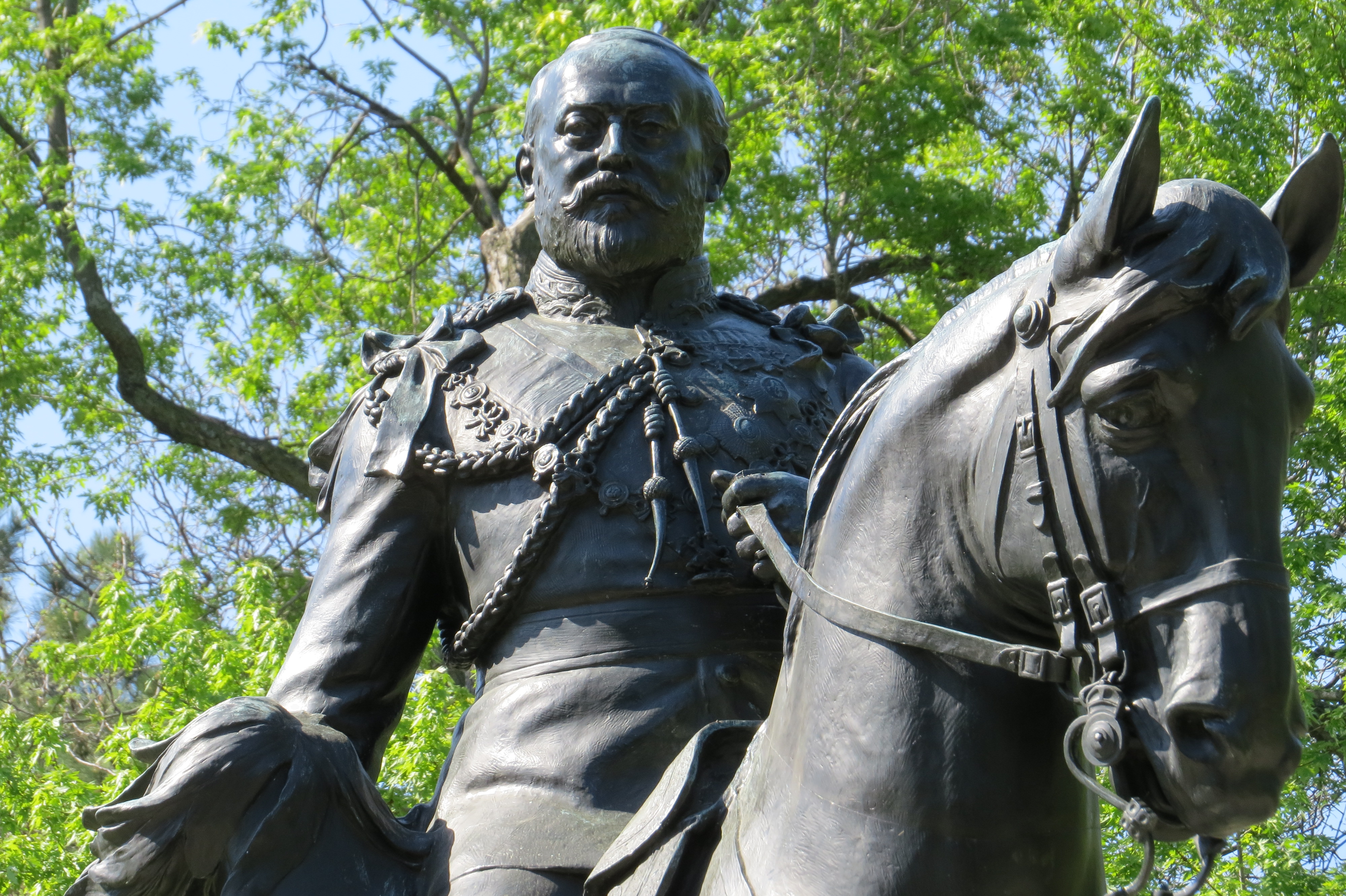
Walking through Queen’s Park, I took a picture of the statue of King Edward VII seated on a horse. The equestrian statue, originally standing in Edward Park in Delhi, India, was “erected on the present site through the generous subscriptions of the citizens of the area” reads the plaque placed before it.

IMG_0784

The Equestrian Statue of King Edward VII

IMG_0786

The plaque

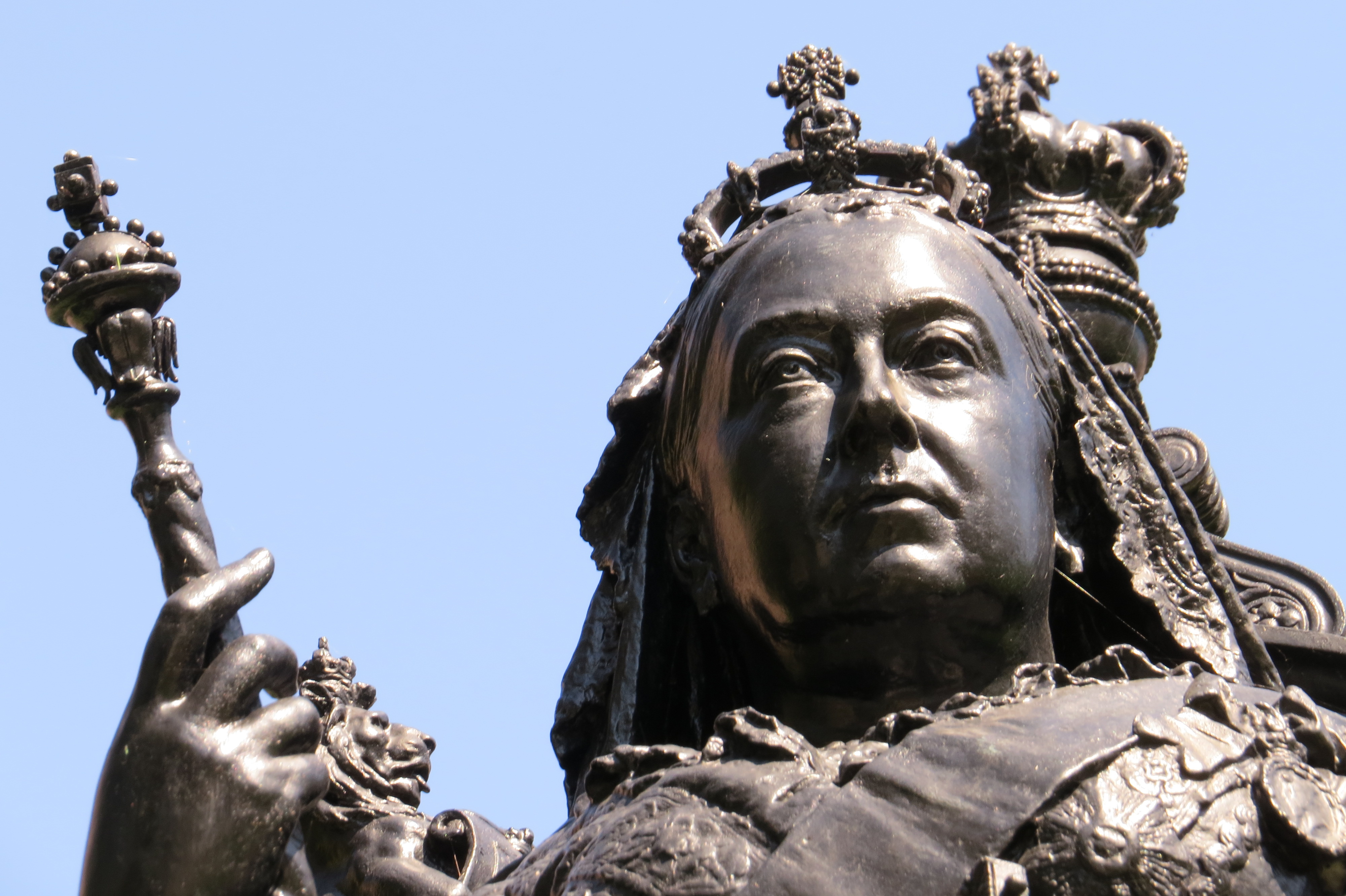
A statue of Queen Victoria stands near the Legislative Building’s entrance where the public was admitted.

IMG_0787

Her Majesty Queen Victoria /1819-1901/

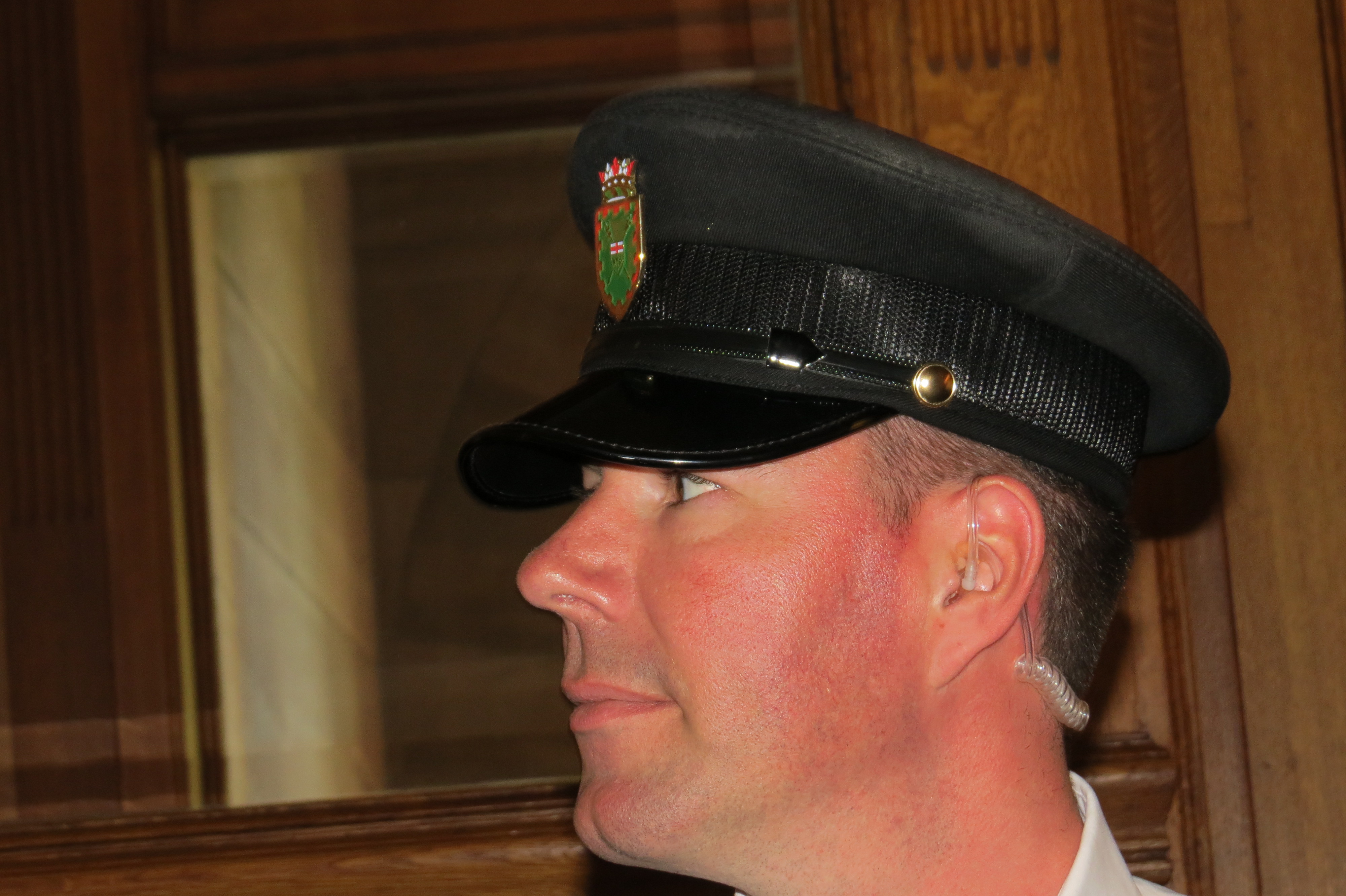
Friendly, knowledgeable, and fluently bilingual guides wearing green T-shirts welcomed me. “If you have any questions, ask anyone in a green T-shirt,” a young brunette wearing glasses prompted cheerily. There were policemen guarding the premises, too.

When I asked this handsome man in uniform whether he’d let me photograph him, he said, “Take as many pictures as you need until you’re satisfied.”

IMG_0797

Handsome policeman I

IMG_0799

Handsome policeman II

The impression I got the moment I stepped inside the Legislative Building, designed by architect Richard Waite and built between 1886 and 1892, was one of magnificence and splendor.

Attention to detail is everywhere. The ceilings are very high (some with chandeliers), balustrades are carved from wood, and the building’s west wing (rebuilt in 1909 after a destructive fire) boasts of a marble floor displaying a delicate mosaic pattern reminiscent of mosaics I once saw in Modena, Italy.

IMG_0857

Fine mosaic floor

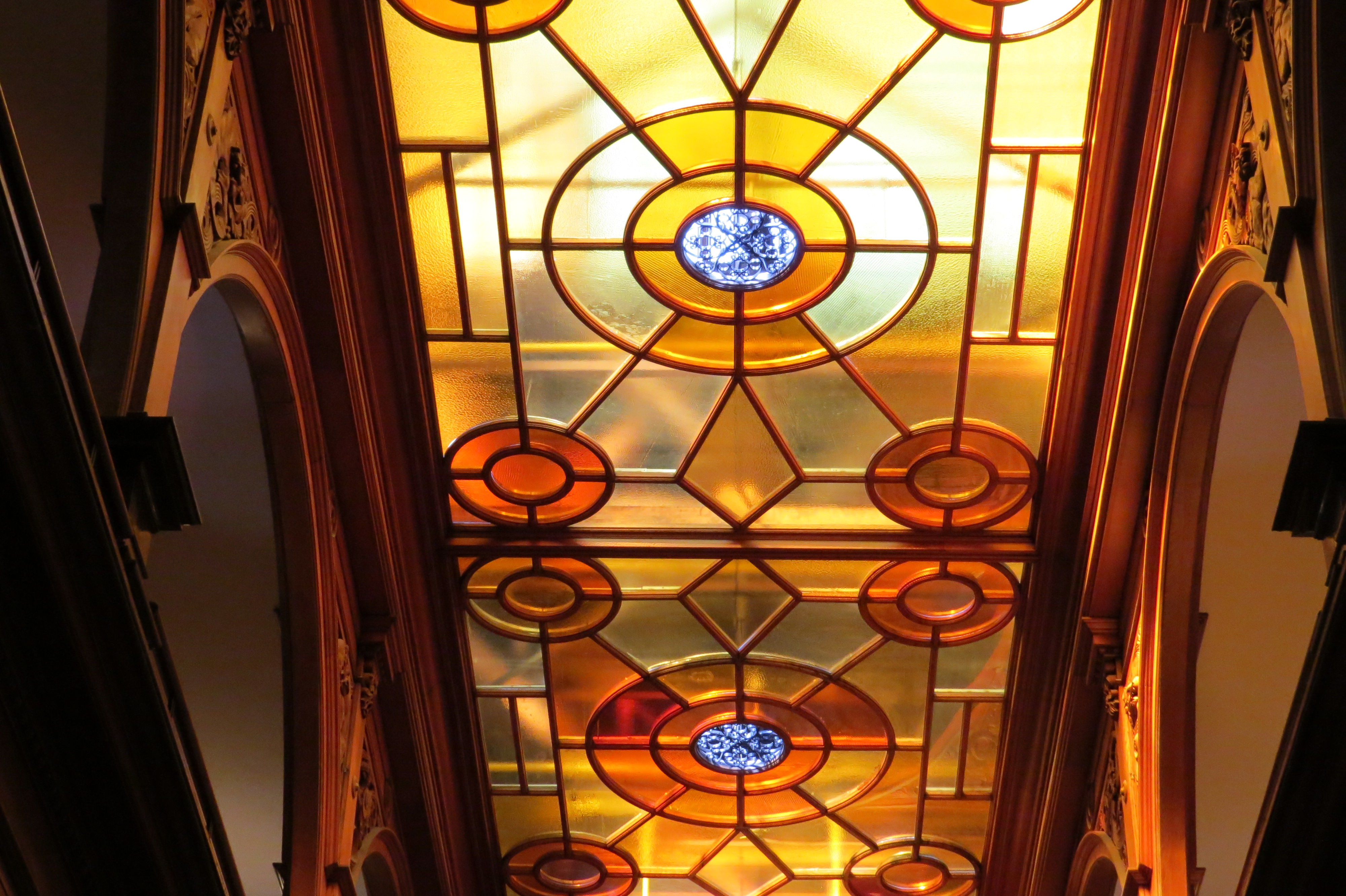
One of the most impressive features of the Legislative Building is its stained glass ceiling.

IMG_0806

Stained glass ceiling

Historical portraits depicting political personalities dating from the distant past to the present adorn the building’s walls.

“Doesn’t he look like Napoleon?” a visitor asked me as I snapped this shot.

“Yes,” I laughed, “he does!” realizing that this was probably what prompted me to select this portrait among all the others.

IMG_0836

Napoleon lookalike

This colourful room is the one which the Lieutenant Governor of Ontario, David Onley, uses for celebrations.

IMG_0838

The room of the Lieutenant Governor

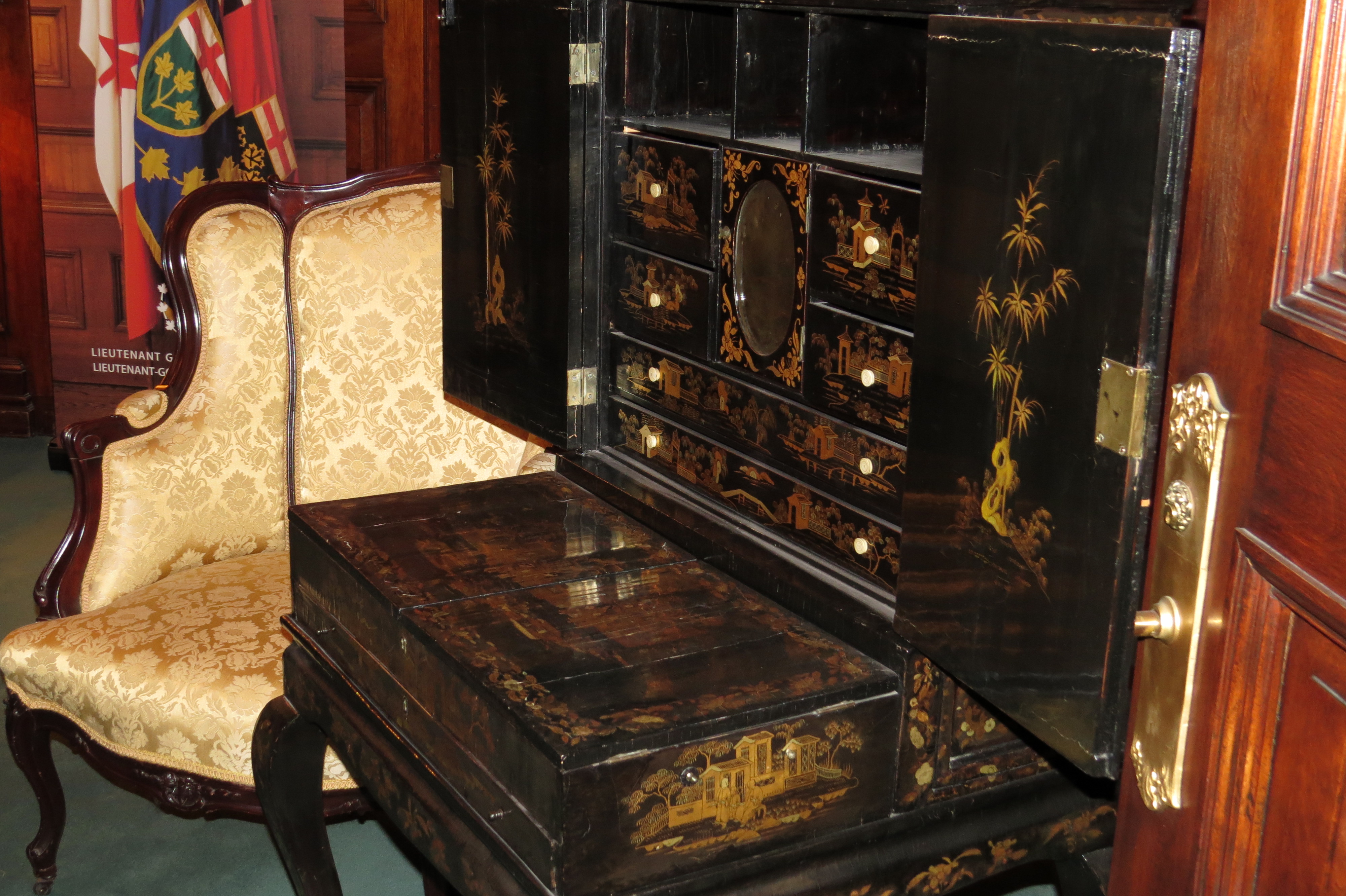
As I exited the room through the wooden door you see on the left, I saw this intriguing antique cabinet.

IMG_0846

Antique furniture adjacent to the Lieutenant Governer’s room

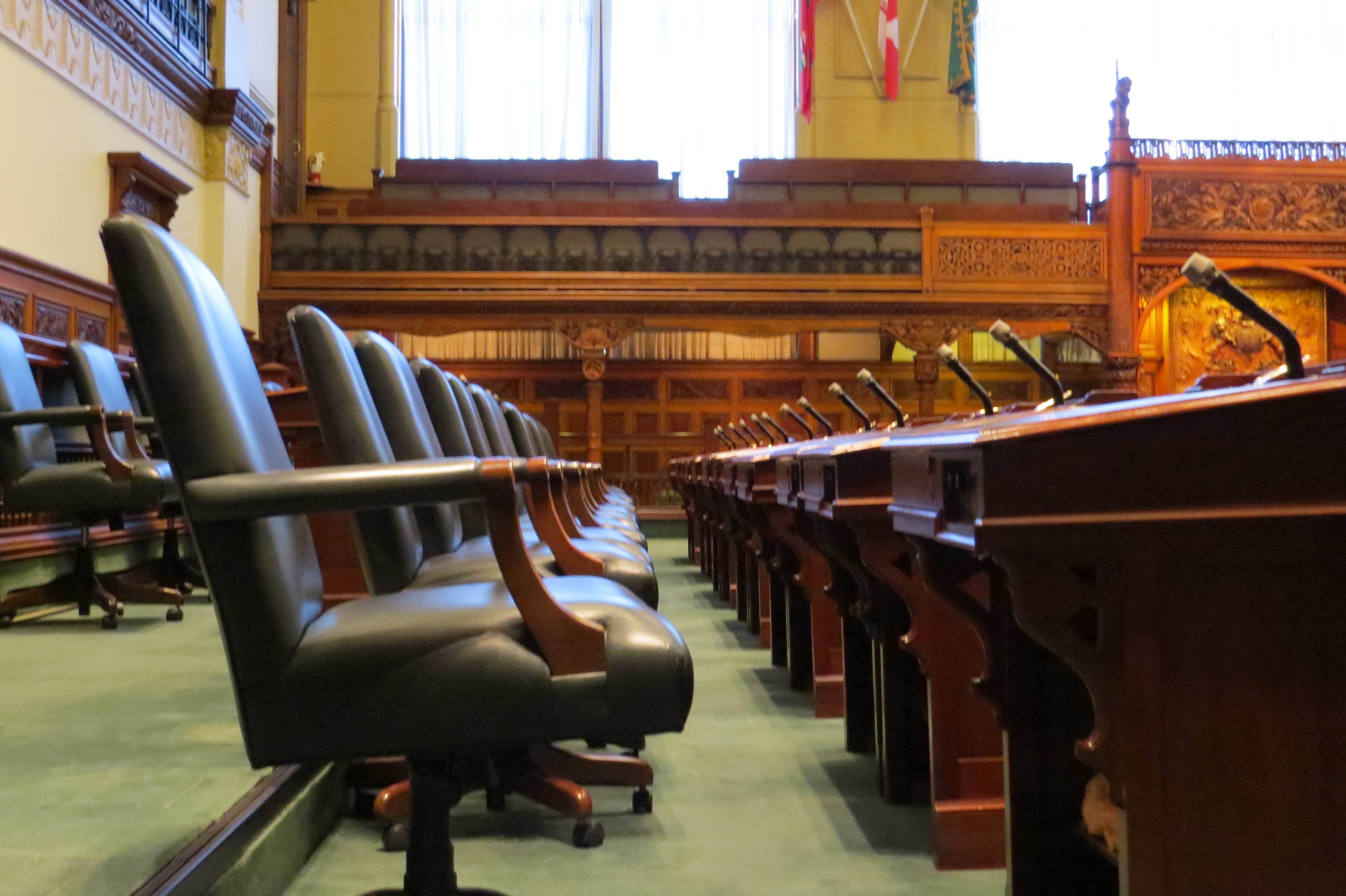
The pièce de résistance, however, is the Legislative Chamber “with its richly carved details set in mahogany and Canadian sycamore.” This is the chamber in which Members of Provincial Parliament (MPPs) “debate and pass laws for the Province of Ontario.” (Source: http://www.ontla.on.ca)

IMG_0812

The government’s seats

IMG_0822

The Speaker’s chair

IMG_0820

Chamber door detail

For more information about The Legislative Building, visit www.ontla.on.ca.


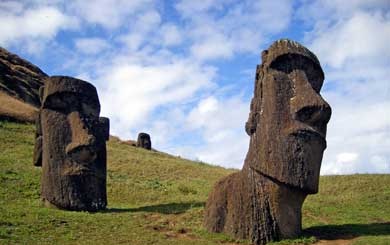
The Mo’ai of Easter Island

Easter Island, also known as Rapa Nui, is “the most remote, inhabited island on the face of the planet.” 1

In the middle of the Pacific Ocean, Rapa Nui is located 2 500 miles west of Santiago Chile and 1 500 miles east of Polynesia. It was settled by the Polynesians in the fifth century AD. Escaping overpopulated homelands, they set sail from Tahiti and the Marqueses for what is known today as Easter Island. 2

Without maps or compasses, in their outrigger canoes, the Polynesian navigators used their deep knowledge of currents, swells and the flight of birds in order to detect land including New Zealand, Hawaii and Rapa Nui. 3 By the fourteenth century, Rapa Nui had a thriving population that had reached 20 000, five times what the island could naturally support. 4

In 1722, however, when Dutch explorers arrived on the island on Easter day, hence the island’s new appellation, they were shocked to find a “starving population and a struggling culture.” What had happened? Why were the mo’ai, the island’s legendary stone statues, strewn about as if they’d been abandoned? Why had Rapa Nui eroded into a quasi-barren land?

Something eventful had happened that had nearly decimated the people of Rapa Nui whose population remained less than 2 000; the island was ecologically devastated; and, from a rich, thickly forested island, painfully few trees remained. 5

The Mystery of Easter Island Giants attributes the devastation of Rapa Nui to the inhabitants themselves placing the blame on overpopulation; the overproduction of mo’ai stone statues; and the depletion of the island’s natural resources. One theory posits that the statues were moved from the volcanic quarries where they were carved to other parts of the island (i.e., distances of up to twenty kilometers) by rolling them on logs and that this would have seriously depleted the island’s trees. Another theory claims that the mo’ai were moved upright with strategically positioned groups of men manipulating the statues’ movements using ropes. According to the ancients, though, the mo’ai walked to their new locations. 6

Ancestor worship

The mo’ai heads represent the island’s protective ancestors of old. They are said to personify the “living faces” of the Rapa Nui. When a chief died, a statue or, mo’ai, was carved in his honor in which his spirit was said to live on. The statues embodied the dead returned to life to act as guardians of the living. Although we are used to seeing the mo’ai with dark, empty eye sockets, reputed archaeologist Sergio Rapu discovered the mo’ai’s original, coral eyes. 7 When placed inside the statues’ empty eye sockets, the mo’ai take on an entirely new appearance and appear to look “alive.”

Lava tubes & cave living

In the sixteenth century, roughly one thousand years after settling, the inhabitants of Easter Island began inhabiting extensive cave systems in order to protect themselves against warfare and raiding, now endemic on the island. They lived and cooked in these caves, ancient lava tubes through which “rivers of molten rock once flowed from volcanoes now long extinct.” 8

There was no more wood from which to build their outrigger canoes and they were essentially cut off from the outside world. There were food shortages as fishing became difficult and the population grew. This created bitter and bloody conflicts over land and food between different clans.

Skeletal mo’ai

To illustrate the ecological and social ravages plaguing the island, a new kind of mo’ai were created: small wooden statues, emaciated in appearance. These skeletal figurines depicted the island’s starving population.

The Birdman Cult

The Birdman Cult, which replaced the Ancestor Cult, the worship of Rapa Nui’s ancestors in the form of the mo’ai, was the redistribution solution devised to resolve Rapa Nui’s resource problem (i.e., the dearth of agricultural land and food). Leaders and warriors gathered annually at Orongo in order to compete for the political and economic control of Easter Island. The outcome of the contest determined which clan would rule the island the coming year.

The egg hunt on Motu Nui

The clans’ best warriors would, carrying reed floaters, race down Orongo’s incredibly steep 1 000 ft. cliff at the bottom of which were shark-infested waters. Upon reaching the water, they would swim, supported by their reed floaters, fighting strong ocean currents and powerful swells, to the larger of two nearby islands, Motu Nui. Once on Motu Nui, they had to find the egg of what they considered to be a magical bird that came straight from heaven. Its egg was considered a symbol of “cosmic fertility and power.” 9

As soon as a warrior-contestant found an egg, and after most likely securing it in his headdress, he would plunge back into the water on his reed floater, swim back to the base of Orongo’s cliff, climb up, and give the egg to his chief, thus winning the grueling Birdman contest.

Rapa Nui

“Rano Kau volcano in Rapa Nui National Park, Easter Island”

Image source: DzineBlog 360

Moai

“Patiperros-‘Rapa Nui'”

Image source: Club Chileno de Chicago

References

1 The Mystery of Easter Island Giants, Host, Josh Bernstein; Executive Producers, William Morgan and Jason Williams.

2 Ibid.

3 Ibid.

4 Ibid.

5 Ibid.

6 Mysterious Easter Island Heads Have Bodies Too, TheLeakSource.

The Mystery of Easter Island Giants, Host, Josh Bernstein; Executive Producers, William Morgan and Jason Williams.

8 Ibid.

9 Ibid.


An Unusual Travel Destination: The Seychelles, Praslin Island

I was thinking about unusual travel destinations and came upon an interesting website which lists such places, with each featured image being more beautiful than the one before it. 1

As I perused the destinations, my attention was inexplicably drawn to Praslin Island, Seychelles.

Northeast of Madagascar and East of Kenya in the Indian Ocean, Praslin, the second largest island of  the Seychelles, lies 45 kilometers northeast of Mahé. With a populationj of 6 500 people, it comprises of two administrative districts: Baie Sainte Anne and Grand’ Anse. 2

The Seychelles are truly “another world” with some of Praslin’s beaches appearing in the top-10 list of the world’s best beaches.

The Seychelles boast of two, UNESCO World Heritage Sites: Vallée de Mai (in Praslin) where the Coco-de-Mer, the world’s heaviest nuts grow on ancient palm trees in a primeval forest; 4 and Aldabra, virtually untouched by humans, the world’s second largest coral atoll, part of the Outer Islands. ” The atoll has about two thirds of the world population of Giant tortoises, about 100,000 out of a reported 150,000.” 4 General Gordon thought that the Vallée de Mai was the original Garden of Eden. 6

Praslin, named after the Duc de Praslin, was settled by the French in the mid-18th century. Prior to that, it was frequented by pirates.

Praslin stands at the forefront of Seychelles’ tourism industry with a strong tradition of hospitality and wide range of accommodation facilities. It also provides a base for excursions to neighbouring islands, some of which are important sanctuaries nurturing rare species of endemic flora and fauna. 7

What should you see in Praslin? According to Lonely Planet, Anse Volbert, which is also known as Côte d’Or, and Grand Anse. 8

Where should you stay in Praslin? The Castello Beach Hotel’s description reads in part: “This four-star deluxe hotel opened January 2009, is situated on the north west of Praslin right beside one of the most beautiful, year-round beaches at Anse Kerlan. Surrounded by a tropical garden, this boutique hotel is a sanctuary in paradise with a spectacular view of the islands of Cousin, Cousine, Mahé and Silhouette.” 9  This “charming boutique hotel” also offers proximity to the beach, a restaurant and bar, swimming pool, massage parlor and mini club. Their friendly team will organize sailing and yacht excursions. 10

Are you ready to go to paradise on earth? Book your trip with Seychelles.travel, the official destination website for the Seychelles Islands.

Bon voyage!

Seychelles

Praslin Island, Seychelles

References

1.  50 Unusual & Awesome Places of the World

2. Seychelles.travel

3. Ibid.

4. Ibid.

5. Wikipedia, the Free Encyclopedia, Aldabra.

6. Op. cit.

7. Seychelles.travel

8. Lonely Planet, “Introducing Praslin.”

9. Castello Beach Hotel. And, the hotel’s official website.

10. Ibid.